
My Day in the Verve Vault
- hailo

- Mar 15
- 6 min read
In December, I had the honor of hanging at the office of a record label called Verve Records for a couple of hours. What I did to earn the honor? I have no idea, but hanging out is a skill that I didn’t develop until I stopped being addicted to my phone. And I like to think that I was invited because now, I'm very good at hanging out.

That morning, I left my apartment on the Lower East Side of Manattan, walking down the stairs in black cowgirl boots I bought in London and a shin length laundry by Shelli seal dress with a small, unassuming hole on the left side.
I got on the train and started north, distracting myself like everyone else in the contained fluorescent light. Everyone wears earphones nowadays, with their neck craned down into their phone. To the point where other people’s conversations can feel like an intrusion, simply because you’re not included.
I got off around Columbus Circle. I used to stay around here when i was younger, back when Miss Universe had an apartment for the titleholders down the block. I’d walk to the Whole Foods, terrified of the train and the rest of the world. I was a teenager in a business district, meandering around fifth ave with tourists and men in suits.
That day In December, I stopped into the Universal music building and left my name at the door.
It is my third time here—the first to interview Madison Cunningham, the second for a Holiday Cocktail Making class (my team made a drink called the “one night stand"), and now to hang out in the Verve Vault.
Verve is a record label under Universal Music with a rich collection of jazz, soul, and more. It was Ella Fitzgerald’s record label. She was their first client. I knew of Verve before I knew anyone at Verve, because of a vinyl I inherited from my Late Great Aune Earlene. She worked hard for her own money as the nanny of a wealthy white family. She had her own house, a collection of purses, furs, a crooning, crackly, soothing voice, and an astonishing collection of vinyls, including Ella Fitzgerald singing the Gershwin song book.
When I moved from Germany back to New York at 22, I was obsessed with this album, listening to it in the shoebox of a room I sublet for two weeks in SoHo as I looked for a job. I feel like my third life started in that room, on someone else’s mattress, with a single suitcase of things and a pathetic lamp I bought from target. I started going to bottle service clubs, meeting nannies from all over the world, dancing to random DJs while drinking orange juice and cheap tequila from a bucket. I started dating interesting men from various apps, because everything and everyone was still so new to me.
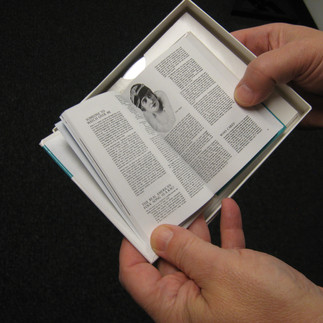
Six months or so later, I had a job, a routine, and I began to cram my own creative output into late nights and weekends. I taught myself guitar and my father sent me a photo of a vinyl in Aunt Earlene’s collection— the very same Gershwin Album that I’d become obsessed with, with The Face by Bernard Buffet on the cover.

Fast forward a year and a half or so, and here I am re-entering the Universal Music Building to hang out in the Verve Vault.
I sign in and go to up to their floor where I’m greeted one of the lovely staff members, Sophie, who is also a writer and brings me to the vault and gets me cup of coffee. A man walks in and smiles kindly, introducing himself before diving into the inner workings of Verve, vinyl, and more.
Verve has a lot of gorgeous reissued versions of classics, and they use a record pressing company in Kansas, my home.
There are different types of recording methods that yield different sounds, like Mono versus Stereo versus Atmos. Mono has one channel, stereo has two, and Atmos has 17-23. He put a vinyl on the single player in the room, demonstrating Mono, then put another demonstrating Stereo, and it was incredible how different instruments felt like they were coming from different parts of the room, even though the two types were played on the same record player through the same speakers.
He lit up, talking about rare archives of Ella Fitzgerald tapes acquired from her old manager, how she spoke between the songs, what purity history yielded thanks to a real time recording.
I find it fascinating how so much of art is archive. How Zora Neale Hurston would not be publicly read if it were not for women like Alice Walker. How Eve Babitz could have faded into obscurity save for women like Lili Anolik. How Ella Fitzgerald is widely listened to thanks to our late Great Aunts who pass down their record collections, or executives who spend hours tracking down tapes and papers and catalogs all in the name of preserving art.
Everyone wants to be a great artist, but I think you also have to look back and pay your dues. You have to learn how to appreciate good things before you can make great thinks of your own.
I love jazz. I love 60s big band jazz because my Grandmother would give me cassette tapes to play on my boombox. I was 5 or 6. I'd put them in and let them play and dance around my room, like I was a showgirl. I'd contort my body onto my blue swivel computer chair and fall of it in ways that nearly broke my neck. But I'd get back up and laugh within those pink walls.
After the discussion about the Vault, the good people of Verve Records tell me that I can hang out in the Vault by myself for half an hour or so, and as they all leave me in the room alone, I feel like that kid again, I'm in there with a single record player and a whole wall of vinyls. I pick one, marking the location for when I put it back. I walk to the player in the center of the room. And I put it on and turn the volume all the way down before playing it, then I turn it up little by little.
I'm always afraid of making too much noise.
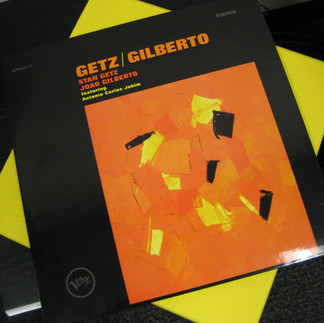
It's Bossa Nova. A deep, rich voice, and I feel like I'm there, I feel like I'm in my bedroom, I feel like I'm in the apartment of a very tall comedian I once dated who took me to a concert at the Brooklyn Paramount with our own special section, before coaxing me back to his apartment with the promise of vinyls and pizza.
He loved blues, he was obsessed with the idea of the pain behind it.
"Listen to the lyrics," he said, "what do you think they mean?"
I shrugged, I was still nervous-to-speak-my-mind young.
"I think," he went on in his velvety accent that made me think of preserved lemons, "that it's about a man who is always a wanderer. Who can never settle down."
I was too willingly stupid to put myself in his mind that moment and realize that he was speaking about himself. Then he put on a video of a live Aretha Franklin performance of I'd Rather Go Blind, and his analysis slipped into ether.
Or it's the summer of 2024 and I'm making a week-long home with a director who spoke in beautiful, windy sentences of artful, limerent affection. I'm working on my computer as he puts my Poulenc record on. I cried in the bathroom at work the day he flew back to London and woke up with Gershwin's The Man I Love on my tongue every day that summer, even though within the next year I'd learn that limerence is real and that you want to be with someone who doesn't send you down beautiful, confusing rabbit holes.
Music carries memories. And you can write it and play it to have something to do or to get something out, and you can listen to it with others, you can use it to fill moments or close your eyes, or do anything on the train but be on the train.
And I am in the Verve Vault, playing record after record after record until my thirty minutes are up and I summon my chaperone to escort me back out like a child on a field trip.
I'm pretty sure I thanked everyone. I like to think that I have good manners.
And now, whenever I look at my Aunt Leanie's copy of Ella Fitzgerald singing the Gershwin song book, I am so many versions of my self, including the one who hung out at Verve for a nice December afternoon.
xx
hailo












Comments